Sun god names come from myths and traditions around the world. Popular choices include Ra, the Egyptian sun god; Helios, the Greek sun god; Surya, the Hindu solar deity; Amaterasu, the Japanese sun goddess; and Inti, the Inca sun god. These names can inspire baby names, fantasy characters, pets, and stories.
Some sun god names are short and easy to pronounce.
Some names carry deep religious and cultural meanings. You can choose a powerful name, a rare mythological name, or a name that represents light and hope.
Popular Sun God Names and Their Meanings
Here are some of the best,known names connected with the sun across different cultures.
| Name | Culture | Meaning or Association |
| Ra | Ancient Egyptian | Sun god associated with creation and divine power |
| Helios | Ancient Greek | God and personification of the sun |
| Sol | Ancient Roman | Roman sun deity |
| Surya | Hindu | Solar deity associated with light and life |
| Amaterasu | Japanese Shinto | Sun kami and an important figure in Shinto tradition |
| Inti | Inca | Sun god central to Inca religion |
| Tonatiuh | Aztec | Sun deity associated with the current age |
| Shamash | Mesopotamian | Sun god associated with justice |
| Aten | Ancient Egyptian | Solar disk worshipped prominently under Akhenaten |
| Sól | Norse | Goddess or personification of the sun |
These names have different histories.
Some symbolize the sun, justice, creation, renewal, or divine authority.
Egyptian Sun God Names
Ancient Egyptian mythology includes several gods connected with the sun. Their roles sometimes overlap, and their importance changed across different periods of Egyptian history.
1. Ra
Ra is one of the most famous Egyptian sun gods. He was associated with sunlight, creation, and divine authority. Egyptian art often depicts him with a falcon’s head and a solar disk above it.
Why choose Ra? It is short, strong, and easy to remember. It can work well for a fictional hero, a pet, or a character who represents power and leadership.
2. Amun,Ra
Amun,Ra is a combined form of Amun and Ra.
This deity held a central place in ancient Egyptian religion and symbolized divine kingship and solar power.
Why choose Amun,Ra? It has a grand, historical sound that suits a ruler, fantasy king, or character with a strong connection to ancient Egypt.
3. Aten
Aten represents the solar disk and gained prominence during the reign of the Egyptian pharaoh Akhenaten. His religious reforms placed Aten at the center of royal worship.
Why choose Aten? It is brief and distinctive. It may suit someone looking for an ancient Egyptian,inspired name connected with sunlight.
4. Khepri
Khepri was associated with the rising sun, renewal, and transformation. He was often represented as a scarab beetle, reflecting the Egyptian association between the scarab and the sun’s daily cycle.
Why choose Khepri? It is a fitting choice for a character who represents new beginnings, growth, or transformation.
5. Ra,Horakhty
Ra,Horakhty combines Ra with Horus in a form associated with the sun and the horizon. The name reflects how ancient Egyptian religion sometimes joined the identities and qualities of different deities.
Why choose Ra,Horakhty? It suits a detailed mythology,inspired story or a character with a strong connection to ancient Egyptian beliefs.
Greek Sun God Names
Greek mythology offers several names connected with the sun, heavenly light, and the beginning of a new day.
Some names represent the sun, while others reflect mythological roles.
6. Helios
Helios was the Greek god and personification of the sun.
In Greek mythology, he crossed the sky in a golden chariot and brought daylight to the world.
Why choose Helios? It sounds powerful and elegant, making it a strong option for a fantasy hero, fictional king, or mythological character.
7. Apollo
Apollo was a major Greek god associated with music, prophecy, healing, and other aspects of life.
Later Greek tradition associated Apollo with the sun, though he and Helios were separate figures in earlier mythology.
Why choose Apollo? It is recognizable, easy to say, and rich in mythological associations.
It suits anyone looking for a familiar Greek name with meaning beyond the sun.
8. Hyperion
Hyperion was a Titan associated with heavenly light. In the mythology recorded by the Greek poet Hesiod, he was the father of Helios, Selene, and Eos.
Why choose Hyperion? Its grand sound makes it suitable for a powerful fantasy character or a figure connected with the heavens.
9. Eos
Eos was the Greek goddess of the dawn. She represents the first light of morning rather than the sun itself.
Why choose Eos? It is a short, distinctive feminine name that suggests a fresh start, morning light, and new possibilities.
10. Phaethon
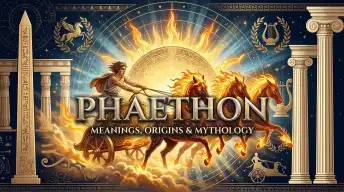
Phaethon is known in Greek mythology as the son of Helios. In one famous story, he attempts to drive his father’s solar chariot but loses control, causing disaster.
Why choose Phaethon? It may suit a fictional character whose story explores ambition, courage, or the risks of seeking too much power.
If you want a name that directly identifies a Greek sun god, Helios is the clearest choice. Apollo is another popular option, especially for those who appreciate Greek mythology more broadly.
Roman Sun God Names
Roman mythology includes several names connected with the sun, light, and dawn. Some figures share connections with Greek mythology, while others reflect Roman religious traditions.
11. Sol
Sol was the Roman sun god. The Latin word sol means “sun,” making it one of the simplest names associated with solar mythology.
Why choose Sol? It is short, memorable, and easy to pronounce. It can work as a baby name, pet name, or name for a fictional character.
12. Sol Invictus
Sol Invictus means “Unconquered Sun.” This title was associated with an important Roman solar cult, particularly during the later Roman Empire.
Why choose Sol Invictus? It has a powerful meaning that suits a fantasy ruler, a heroic character, or a story about strength and endurance.
13. Aurora
Aurora was the Roman goddess of dawn and the Roman counterpart of the Greek goddess Eos.
Why choose Aurora? It is an elegant feminine name associated with morning light, beauty, and new beginnings. Remember that Aurora represents dawn rather than the sun itself.
14. Phoebus
Phoebus is a Greek,derived epithet meaning “bright” or “radiant.” It was used for Apollo and became associated with his solar imagery.
Why choose Phoebus? It offers a less common alternative to Apollo and works well for a character associated with light, music, or classical mythology.
Best Roman,inspired choices: Sol is the most direct and simple option, while Aurora is a good choice for someone who prefers a feminine dawn name.
Hindu Sun God Names
Hindu traditions include several names associated with the sun, particularly Surya. These names may carry religious and cultural significance, so it is helpful to understand their traditional meanings before choosing one.
15. Surya
Surya is the Hindu solar deity associated with sunlight, energy, and life. Traditional images often depict him riding a chariot drawn by horses.
Why choose Surya? It is a direct and established name for a solar deity. It may appeal to families and writers looking for a name with a strong connection to Hindu tradition.
16. Ravi
Ravi is a Sanskrit name meaning “sun.” It is also a name associated with Surya.
Why choose Ravi? It is short, familiar in South Asia, and easy to pronounce in many languages. It is a personal name with a solar meaning rather than the name of a separate sun god.
17. Aditya
Aditya comes from Sanskrit and refers to the Adityas, a group of deities in Hindu tradition. Surya is also known as an Aditya.
Why choose Aditya? It is a traditional name with a strong connection to Hindu mythology and culture.
18. Bhaskara
Bhaskara is a Sanskrit name associated with the sun and the idea of producing or spreading light. It is also used as an epithet of Surya.
Why choose Bhaskara? It is a distinctive option for someone who wants a name associated with brightness, knowledge, and illumination.
19. Vivasvat
Vivasvat is a Vedic figure closely associated with the sun and linked with Surya in Hindu traditions.
Why choose Vivasvat? It is a less familiar option for a mythology,inspired character or a story rooted in Vedic tradition.
Best Hindu sun names: Surya is the most direct choice for the solar deity, Ravi is a shorter personal name meaning sun, and Aditya offers a traditional alternative.
Japanese Sun Goddess Names
Japanese Shinto tradition recognizes kami, or sacred beings and divine presences. Amaterasu is one of the most important figures in Japanese mythology and has a central connection with the sun.
20. Amaterasu
Amaterasu, often called Amaterasu Ōmikami, is the Japanese sun kami. She plays a major role in classical Japanese mythology and is closely connected with the imperial tradition.
Why choose Amaterasu? It is a distinctive feminine name associated with sunlight, divine importance, and Japanese mythology.
21. Amateru
Amateru is a name found in Japanese religious and historical contexts with solar associations. Its use and meaning depend on the specific tradition, so it should not automatically be treated as another spelling of Amaterasu.
Why choose Amateru? It may appeal to someone looking for a less familiar name inspired by Japanese solar traditions, provided they verify its historical context.
22. Tsukuyomi
Tsukuyomi is the Japanese moon kami, not a sun deity. The name is included here because it can complement a sun,themed name in a celestial naming pair.
Why choose Tsukuyomi? It may suit a moon,themed character paired with Amaterasu in a story inspired by Japanese mythology.
Best Japanese solar name: Amaterasu is the clearest choice if you want the name of a well,established Japanese sun goddess.
Inca and Aztec Sun God Names
Inca and Aztec civilizations developed distinct religious traditions in the Americas. Their sun deities had important roles in their respective understandings of the universe, but the two cultures should not be treated as one tradition.
23. Inti
Inti was the Inca sun god and held a central place in Inca religion. The sun was also important to Inca royal authority and ceremonies.
Why choose Inti? It is short, distinctive, and easy to remember. It can work well for a fictional character or a creative project inspired by Inca mythology.
24. Apu Inti
Apu Inti is a form of the name associated with the Inca solar tradition in some references. The precise use of the title should be checked against specialist sources before treating it as a separate deity.
Why choose Apu Inti? It may suit a character or story that explores Inca mythology in greater depth.
25. Tonatiuh
Tonatiuh was an Aztec sun deity associated with the sun and the cosmic order of the age described in Aztec tradition.
Why choose Tonatiuh? Its distinctive sound makes it an interesting option for a fantasy hero or a character inspired by Mesoamerican mythology.
26. Huitzilopochtli
Huitzilopochtli was a major Aztec deity associated with war and the sun. His religious role extended beyond solar symbolism.
Why choose Huitzilopochtli? It is suitable for a character whose story draws on Aztec mythology, warfare, and divine power.
27. Nanahuatzin
Nanahuatzin is a figure in Aztec creation mythology who becomes the sun through an act of sacrifice. His story links the sun with courage, transformation, and the creation of the world.
Why choose Nanahuatzin? It may suit a character who sacrifices something important to bring hope or renewal to others.
Best choices: Inti is a simple Inca sun god name, while Tonatiuh is a strong option for someone interested in Aztec mythology.
Mesopotamian Sun God Names
Ancient Mesopotamian cultures developed rich religious traditions, including gods associated with sunlight, justice, and the natural order.
28. Shamash
Shamash was the Akkadian sun god. He was associated with light, justice, and truth, and was understood as a divine witness to human actions.
Why choose Shamash? It suits a wise character, judge, protector, or hero who stands for fairness and honesty.
29. Utu
Utu was the Sumerian sun god and closely corresponded to the Akkadian Shamash.
Why choose Utu? It is short, simple, and distinctive. It can work as a fantasy name or a pet name inspired by ancient mythology.
30. Nergal
Nergal was associated with the underworld, warfare, and destructive forces. Some traditions also connect him with the sun’s intense heat, but he was not simply another version of Shamash.
Why choose Nergal? It may suit a darker fictional character associated with the underworld, conflict, or dangerous power.
Best Mesopotamian choices: Shamash is especially suitable for a character associated with justice, while Utu is a compact and memorable option.
Norse and Germanic Sun Names
Norse mythology presents the sun as a female figure. This makes its solar naming tradition different from those in which the primary sun deity is male.
31. Sól
Sól is the Norse sun goddess or personification of the sun. In Norse mythology, she travels across the sky, bringing daylight to the world.
Why choose Sól? It is short and elegant, with a direct connection to the sun. The accented spelling reflects the Old Norse name.
32. Sunna
Sunna is associated with the sun in Germanic tradition and is connected with the broader idea of a female solar figure.
Why choose Sunna? It has a gentle sound and can work well as a feminine name inspired by northern European mythology.
33. Dagr
Dagr is the Norse personification of day, rather than the sun itself.
Why choose Dagr? It is a distinctive choice for a character associated with daylight, time, or the cycle of day and night.
34. Máni
Máni is the Norse personification of the moon. Although it is not a sun god name, it can complement Sól in a sun,and,moon naming theme.
Why choose Máni? It works well for a moon,themed character in a story that includes both solar and lunar figures.
Best Norse sun name: Sól is the clearest choice when you specifically want a name that represents the sun.
More Sun God Names From Around the World
Different cultures have developed their own stories about the sun, its power, and its role in life. The following names offer more options, including some that are less familiar in popular baby,name lists.
35. Guaraci
Guaraci is commonly identified as a sun deity in accounts of Tupi or related Indigenous Brazilian traditions. Details and spellings may vary across sources.
Why choose Guaraci? It is a distinctive option for a fictional character inspired by South American mythology. Research the specific cultural tradition before presenting it as historically definitive.
36. Antü
Antü is associated with the sun in Mapuche tradition, a living Indigenous culture with roots in present,day Chile and Argentina.
Why choose Antü? It is a short, distinctive name connected with an important natural force in Mapuche tradition.
37. Akycha
Akycha appears in some references to solar traditions among Indigenous peoples of Alaska. Its precise cultural identification and spelling require verification.
Why choose Akycha? It may interest writers researching northern solar traditions, but confirm its origins before using it as a culturally specific name.
38. Atum
Atum was an Egyptian creator deity associated with Heliopolis and, in some traditions, the setting sun.
Why choose Atum? It is a compact mythological name that can represent creation, completion, or the closing of a cycle.
39. Horus
Horus was a major Egyptian god associated with the sky and kingship. Some forms of Horus were linked with solar power, including Ra,Horakhty.
Why choose Horus? It is a strong option for a fictional ruler, protector, or character associated with the heavens.
40. Sekhmet
Sekhmet was an Egyptian lioness goddess associated with warfare, healing, and the powerful Eye of Ra.
Why choose Sekhmet? It is a striking feminine name for a character who represents strength, courage, and fierce protection.
41. Hathor
Hathor was an important Egyptian goddess associated with love, music, motherhood, and other aspects of life. Some traditions connected her with the solar disk.
Why choose Hathor? It may suit a character whose story combines warmth, beauty, protection, and Egyptian mythology.
42. Tefnut
Tefnut was an Egyptian goddess associated with moisture and the natural world. She also appears in traditions involving the Eye of Ra.
Why choose Tefnut? It is an unusual mythological choice for a character connected with nature and divine power.
43. Saulė
Saulė is the Lithuanian name for the sun and the name of the sun goddess in Lithuanian mythology.
Why choose Saulė? It is a meaningful feminine option for someone interested in Baltic mythology. The diacritic is part of the Lithuanian spelling.
44. Saule
Saule is associated with the sun and the sun goddess in Latvian tradition. Although the spelling resembles Lithuanian Saulė, the names belong to different languages and cultural traditions.
Why choose Saule? It offers a simple, sun,associated name inspired by Latvian mythology.
45. Arinna
Arinna is the name of a city associated with the Sun Goddess of Arinna in Hittite religion.
Why choose Arinna? It is a distinctive feminine name for a character inspired by ancient Anatolian history.
46. Wurusemu
Wurusemu is a name associated with the Hittite Sun Goddess of Arinna in scholarly references.
Why choose Wurusemu? It may suit a character in a story exploring ancient Anatolian religion, especially if you want an uncommon historical name.
47. Dazhbog
Dazhbog is a Slavic deity associated with prosperity and sunlight in interpretations of Slavic mythology. Details of his role differ among sources.
Why choose Dazhbog? Its strong sound may appeal to someone naming a fantasy character connected with abundance or divine power.
48. Belenus
Belenus was a Celtic deity associated with healing and, in some interpretations, solar imagery. The extent of his connection with the sun is debated.
Why choose Belenus? It is worth considering for a Celtic,inspired character, provided the uncertain aspects of his solar association are represented accurately.
49. Mithra
Mithra has important connections with covenants and divine order in ancient Iranian religion. His relationship with the sun differs across historical traditions.
Why choose Mithra? It may suit a character associated with loyalty, agreements, and divine order.
50. Mithras
Mithras was the central figure of the Roman Mithraic mysteries. Roman Mithras developed within a distinct religious setting and should not be treated as identical in every respect to the Iranian Mithra.
Why choose Mithras? It is an option for a story inspired by Roman religious history and ancient mystery traditions.
Sun,Inspired Names That Are Not Names of Gods
You do not have to choose an ancient deity’s name to capture the warmth and brightness of the sun. These modern or everyday names are inspired by solar language and imagery.
51. Suraj
Suraj is a South Asian personal name meaning “sun” in Hindi and related languages.
Why choose Suraj? It has a direct solar meaning and is familiar in several South Asian communities.
52. Soleil
Soleil is the French word for “sun.” It is a word,name, not the name of an established ancient sun deity.
Why choose Soleil? It has an elegant sound and may appeal to someone who likes French,inspired names.
53. Solaris
Solaris comes from Latin solaris, meaning “of the sun” or “solar.”
Why choose Solaris? It suits a science,fiction character, gaming identity, or creative project built around space and celestial themes.
54. Solara
Solara is a modern, sun,inspired name formed from the solar word family. It should not be confused with the name of a documented ancient sun goddess.
Why choose Solara? It offers a feminine,sounding option associated with light, warmth, and brightness.
55. Sunny
Sunny is an English name or nickname associated with sunshine, cheerfulness, and warmth.
Why choose Sunny? It is friendly, simple, and easy to pronounce, making it especially suitable for a pet or an informal character name.
56. Elio
Elio is a personal name used in several European,language contexts and is related to the Greek name Helios.
Why choose Elio? It is a shorter, contemporary,sounding choice for someone who wants a subtle connection to Greek solar mythology.
57. Solene
Solène is a French feminine name. Its etymology is not the same as the French word soleil, so it should not automatically be defined as “sun.”
Why choose Solène? It may appeal to someone looking for a French name with a graceful sound, even though its solar connection is indirect.
58. Helia
Helia is a feminine name related in form to the Greek name Helios. Its use and interpretation vary, so it is best described as a name inspired by Greek solar language rather than a universally established sun goddess name.
Why choose Helia? It may suit someone who likes Helios but wants a feminine,sounding alternative.
59. Solis
Solis is a Latin form meaning “of the sun” or “of the sun’s,” depending on grammatical context. It is also used as a surname and a creative name.
Why choose Solis? It has a crisp sound and works well for a fictional character, brand, or celestial,themed project.
60. Dawn
Dawn is an English word,name referring to the first light of day. It is not a sun god name, but it connects naturally with sunrise and new beginnings.
Why choose Dawn? It is familiar, straightforward, and meaningful for someone who wants a name that symbolizes hope and fresh starts.
How to Choose the Best Sun God Name
The right choice depends on how you plan to use the name. A traditional deity name may be ideal for a mythology article or a fantasy character, while a short solar name may be more practical for a pet or baby.
- For a strong male character: Consider Ra, Helios, Surya, Inti, or Shamash.
- For a feminine mythological name: Consider Amaterasu, Sól, or Saulė.
- For a short and simple name: Consider Ra, Sol, Inti, or Ravi.
- For a name linked to justice: Shamash is a strong choice because of his role in Mesopotamian tradition.
- For a name linked to renewal: Khepri is associated with the rising sun and transformation.
- For a modern, sun,inspired name: Consider Soleil, Solaris, Solara, or Sunny.
Before choosing a name from a religious or Indigenous tradition, check its spelling, pronunciation, and cultural meaning. Some names have significance that goes beyond their association with sunlight.
Frequently Asked Questions
Q1. What is the most famous sun god name?
Ra is one of the best,known sun god names because of his major role in ancient Egyptian religion. Helios, Sol, and Surya are also widely recognized.
Q2. What are seven popular sun god names?
Seven well,known names are Ra, Helios, Sol, Surya, Amaterasu, Inti, and Tonatiuh. They come from different cultures and do not share identical religious roles.
Q3. What is a female sun god name?
Amaterasu is the Japanese sun goddess, Sól is the Norse sun goddess, and Saulė is the Lithuanian sun goddess. These are direct solar names rather than names simply associated with dawn.
Q4. What is a good sun god name for a boy?
Ra, Helios, Surya, Inti, and Shamash are options associated with male solar deities. Ravi is another choice if you prefer a personal name meaning “sun.”
Q5. What is a good sun goddess name for a girl?
Amaterasu, Sól, and Saulė are strong options. Aurora and Eos are alternatives associated with dawn rather than the sun itself.
Q6. Which sun god name is the shortest?
Ra and Sol are two of the shortest well,known names in this list. Both have three letters and are easy to remember.
Q7. Is Apollo the Greek sun god?
Later Greek tradition linked Apollo with the sun, while Helios was the original Greek sun god and personification of the sun.
Q8. What is the Hindu sun god called?
Surya is the Hindu solar deity.
Ravi and Aditya are linked to the sun in Hindu tradition.
Q9. What is the Roman sun god’s name?
Sol is the Roman sun god.
Sol Invictus means “Unconquered Sun” and was an important solar deity in the Roman Empire.
Q10. Are all sun,inspired names names of gods?
Ra and Helios are sun deities. Soleil means “sun” in French, and Sunny is an English name derived from the word “sunny.”
Aurora and Eos symbolize dawn, not the sun itself.
Conclusion
Sun god names range from short choices like Ra and Sol to distinctive mythological names like Amaterasu, Tonatiuh, and Shamash. Each name has its own cultural background and meaning.
Names linked directly to sun deities include Ra, Helios, Surya, Inti, and Amaterasu. Soleil, Solara, and Solaris offer modern options inspired by sunlight.
Choose a name that suits your purpose, sounds right to you, and respects its cultural history.
A name’s story can give it meaning beyond its sound.
Read More About !

Hi, I’m Ava Morgan, and I have always been fascinated by names inspired by nature, flowers, water, the moon, animals, and meaningful ideas. I enjoy researching what names represent and the stories behind them. I love helping readers discover names connected to peace, life, dreams, brightness, and other beautiful meanings.